7-point Checklist For Choosing The Right Candle Holders

Candle Holders

While candle holders are obviously key elements in any candle setting, all too often they suffer a sort of benign neglect.
Sometimes they’re used “just because they’re there”, and sometimes because choosing the right candle holder seems a rather daunting task.
If deciding what to use is your problem, then this handy checklist could help to simplify the process.
While glass and metal candle holders are the most popular, there is an absolutely huge variety available, in all sorts of materials.
As you run down the list, you will see that as you make decisions you are led naturally to the right kind of holder and the right kind of candle.
Making your own is also an option if you have the patience and skill – or perhaps just the patience!
1 The event
* Are you going to use the candle holder as an integral part of the event, or do you want the candle to be a minor accessory?
* If it’s a seasonal event, such as Easter or Christmas, one of the many plaster candle holders might be suitable.
Once you’ve got the setting for the event clear in your mind, you can move easily to the next point to consider, which is…
2 Size
* If it’s a statement you’re after, think big and bold because anything less will probably not achieve the effect you want. But big and bold brings its own problems – solid colors probably won’t work.
Think vines, ivy, and espalier multiple candle holders, which lend themselves particularly well to larger arrangements with a number of tea lights or small jars.
If you’re going this route, you can probably justify wholesale and/or discount quantities.
* If intimate is your objective, then go with tea lights or small jar or container candle holders.
* If you want to go to the opposite extreme, then chandeliers can add a delightfully unusual touch if you have the right place to positon them, which leads to…
3 Siting
Where are you going to position the candles?
* For instance, if you’re going for a combination of scented candles and food (and you should think very carefully about that particular mix) then the holder needs to be off to one side, substantial enough to be noticed and to be left unattended in safety.
You want to please your guests with a suggestion of a fragrance, not overpower them or the food.
* If the setting is more intimate, then smaller is better. Don’t force your guests to crane over the candles to hold a conversation.
4 Color
* On some occasions you will want to match the colors in your rooms, and on others you’ll be going for contrast.
* You also don’t want to restrict yourself to just one color of candle, so you need enough holders to allow you to mix and match.
* Remember that boldly-colored holders are more difficult to match to the candle color and to your decor.
And once you’ve decided on the right color, you’ll be led naturally to the appropriate….
5 Material
Even though you’ve narrowed down the options, there are still some wonderful decisions to be made.
* You can choose between wood, bronze, silver, crystal, aluminium, metal candle holders, wrought iron, beaded holders, or natural products such as bamboo and coconut.
* Glass is obviously popular. You can either choose a completely neutral holder, or choose a colored holder that will match the candle color. Glass is particularly appropriate for votive candleholders.
* Hurricane candleholders are popular for pillar candles and are wonderful for al fresco dining. Remember to look for one with a handle if you will need to move it while still hot.
Then you only have to decide on ..
6 Shape
* There are a large number of animal and character shapes available, although these have to be matched carefully to the occasion.
Bees, birds and butterflies (particularly pretty when matched to tea light candles) are popular and are available in solid and transluscent colours.
* Consider slate pillar plates for the really big or multi-wick candles; in fact, lovers of pillar candles can find a wide range of coasters and plate holders, some of them beautifully decorated.
7 The candle itself
By now you should have eliminated a whole lot of possibilities; the holders you are still considering will almost choose themselves.
* For instance pillars, which tend to be chunky anyway, require more substantial holders than more delicate candles.
* If you’re going to use votive candles, remember that they must be burned in a holder, because votives are really container candles without a container. If possible go for a straight-sided container as long as the rest of the design pleases you.
The straight sides will reduce the wax pool that is formed when the candle burns, and the tighter the fit, the longer the candle will burn.
* And finally, if you’re in a languid mood, what about the charming bowls, complete with stands, that are specially designed for floating candles?

Aromatherapy Candle Making

Aromatherapy Candle Making

The aromatherapy candle making business has long been there to serve as a nice option for those who are looking for a little bit extra cash to go on a cruise or buy a new car. The concept of aromatherapy candle making had actually all started when the a French chemist named Rene-Maurice Gattefosse performed studies on the cosmetic properties of plants and coined the term “aromatherapy” when he learned that plants contained organic antiseptic elements that worked better than inorganic ones.

Since the formation of the concept of aromatherapy, several people have begun to consider aromatherapy candle making as a profitable alternative. They then started to take the essential oils from plants and used them in forming the beautifully scented candles. The aromatherapy candle making business then became popular as more and more people are appreciating its benefits, although they know that no one is really going to get wealthy and be ready to give up their job by making aromatic candles.

On its most basic, the aromatherapy candle making does require some forms of artistic talent, although learning the fundamental skills needed is just fairly simple. There are even dozens of varying types of wax as well as candle styles out there. However, in the spirit of the true aromatherapy candle making, it is usually advised to employ beeswax, soy wax, as well as palm wax in making the candles instead of paraffin. Most of the experts in aromatherapy candle making in fact typically claims that paraffin is not a good material for crafting aromatherapy candles as it contains carcinogenic chemicals.

In aromatherapy candle making, the idea of trimming the wicks of the candles is usually considered. It is as well necessary to note that in order to produce the best aromatherapy candles, the essential oils should be added at the top of the candle, but never on the wick itself. A number of experts in the field of aromatherapy candle making even commonly consider adding the essential oils after the candle has been lit and there is a small pool of wax at the top of the candle. However, in the aromatherapy candle making, the experts avoid from adding the essential oils to the flame as the oils are capable of catching fire.

Today, the aromatherapy candle making is so famous throughout the world. The Internet has even made it possible for the candle makers and other craftsmen to sell their aromatherapy candle making products around the world at the click of a mouse. And, with some helpful aromatherapy candle making resources out there on the web, there is no doubt then that you will get to create something and see the results of your work first hand. The aromatherapy candle making business is but more about fun than it is about money, but there is still a risk of getting burned if you are not carefully when you work.

The Basics Of Candle Making

The Basics Of Candle Making

Before electricity was discovered and before light bulbs were invented, candles were the main source of illumination inside a building. This makes candle making a very necessary art. But even though electric light bulbs are now the main source of light everywhere, candles remain popular because they add to indoor surroundings a touch of coziness and romance in the atmosphere.

Learning candle making as a hobby has its own appeal and popularity primarily because there is nothing more satisfactory than being able to create something useful with one’s own hands. Candle making can also be a good source of secondary income if one becomes a master of it.

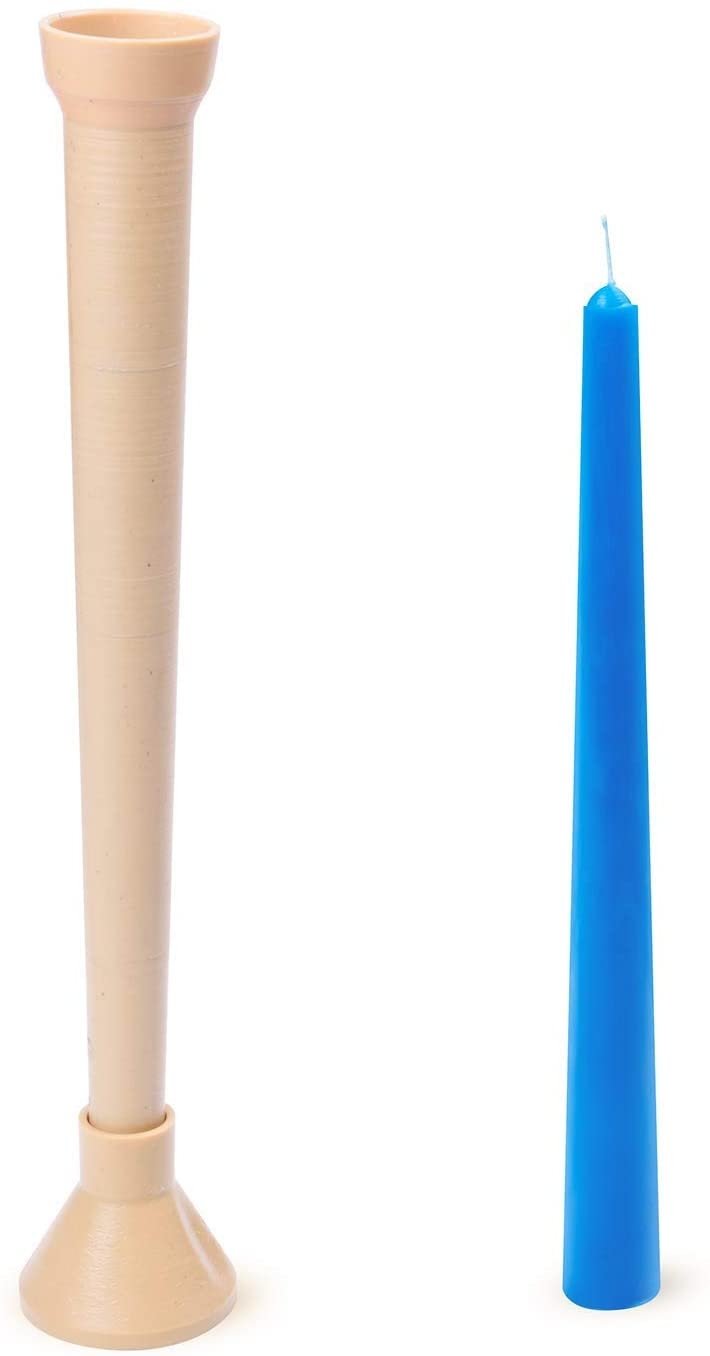
There are many types of candles that you can learn to make with candle making. The most popular type of candles are called tapers or dinner candles, the long and slender candles that are supposed to be held in place by candlesticks.

The pillar candle is another popular type of candle. It is a candle that can stand on its own, with a base that measures three inches or so in diameter. Pillar candles are also called column candles and they come in various shapes.

A jar candle is a candle that is made when the wax is poured into a glass container that is designed to resist the heat of the candle it contains as it burns. Jar candles are also referred to as filled candles.

A votive candle is traditionally used for religious ceremonies. They are small, cylindrical candles placed in a cup called a votive holder. Tealight candles, on the other hand, are small and short candles poured into metal holders.

Specialty candles are sculpted candles that are meant to be displayed rather than burned. They are also called novelty candles.

If you are interested in candle making, what materials should you invest in? Contrary to what you may think, the art of candle making does not require a lot of investment. Most of the time, the necessary materials such as the boilers and the molds can be easily substituted for materials readily available in your own kitchen or garage.

For candle making, you would need the following materials:

* The paraffin wax, which is the basic ingredient for candle making, as well as the wick. If you want to experiment with colors and scents, you can also get dyes and fragrance oils or essential oils.
* A double boiler for heating your wax. A double boiler is a pan inside a pan. The outer pan is for heating water while the inner pan serves to hold the wax being melted. Also, a stove for heating your wax.
* A thermometer for gauging the temperature of your wax. You would need to use a thermometer that is specially designed for candle making because the ordinary household thermometers do not have as high a range.
* A scale, a ladle and a measuring cup. A scale will help you measure the amount of wax you would need to heat for your candles while the ladle is for getting the wax out of its boiler. The measuring cup is for pouring wax into molds – it is safer and easier to do than simply pouring the contents of the boiler into the mold.
* Candle molds and mold seal. The candle molds are for shaping your candles and they come in different shapes, sizes and materials. The cheapest candle molds are made of plastic, but they are not that durable and they cannot withstand too much heat. The best candle molds are those made of metal. The mold seal, on the other hand, prevents the wax from pouring out of the mold.
* A blow torch or heat gun is for melting away imperfections on the surface of your finished candles.

The basic candle that is usually made by one who is just learning candle making is the pillar candle. Below is a step-by-step guide in making one:

1. Measure out the amount of wax that you would need by filling the mold you would be using with water. For every 3 ½ ounces of water, three ounces of wax are necessary.
2. Put your wax into the inner pan of your double boiler, fill the outer pan with water, and then put them to heat. Lower the heat once the water starts boiling.
3. Check the temperature of your wax with your thermometer. Different candles vary in their required temperature, but for pillar candles, the desired temperature is 180°F. Do not let the thermometer touch the bottom of the pan.
4. Prime your wick by dipping it into the wax. When the wick has started to release bubbles, take it out of the wax using thongs or old knitting needles, and then flatten out and leave it to dry. Once dry, slip it inside the mold and hold it in place with a wick support.
5. When the wax reaches the desired temperature, it is time to add whatever additives that you want, such as fragrances and dyes. Be careful when putting these additives in and stir them gently into the wax.
6. Pour your wax into the mold and tap the sides of the mold gently to release the air bubbles. Also, poke small holes near the wick to let out the air pockets that can make your candle a fire hazard. Afterwards, let the wax in the mold set for a few hours to let it cool. When the wax is cooled, you would have made your first candle.

Always remember that safety is paramount in candle making. Be cautious about the materials you are handling and always keep the area where you make your candles clean.

Aromatherapy Candle Oil

Aromatherapy Candle Oil

Aromatherapy candle oils go way back to the time of Ancient Dynastic China when distillation was yet unheard of but incense sticks were about as popular as they are today, perhaps even more. Aromatherapy candle oils are essential oils derived from plants through several methods of extraction. These aromatherapy candle oils may come from several different parts of plants, such as flowers, twigs, leaves, barks, roots, and rinds of fruit.

The aromatherapy candle oils are said to have various therapeutic benefits although there is no actual scientific proof of that. Many can attest though that the oils used in aromatherapy certainly can help in improving well-being and enhancing the effects of other healing methods.

How do Aromatherapy Candle Oils work?

Aromatherapy candle oils work through a process called diffusion. It is when the aromatherapy candle oils are dispersed into the air to fill the room with its fragrant aroma. Diffusing aromatherapy candle oils is fairly easy and very inexpensive. You only need a candle and a match and perhaps a pretty candle holder to go with your coffee table at home.

First, light up the candle and let it burn for at least five minutes. Next, blow it out and then add a few drops of aromatherapy candle oil into the melting wax. Make sure that you do not add the drops into the wick. Once the aromatherapy candle oils steep into the wax, light up the wick again and wait for the aroma to start filling your room.

Aromatherapy candle oils, like other essential oils, are highly volatile and concentrated, which also means that they are highly flammable. Exercise caution when you use them and make sure that you do not leave anything near your candle that might caught on fire. Only use a few drops of pure aromatherapy candle oil or dilute them by mixing them with carrier oil into a glass bottle.

How do you store Aromatherapy Candle Oils?

Although aromatherapy candle oils do not become rancid, they can deteriorate over time. When they do, they may lose some of their important therapeutic benefits. Not all aromatherapy candle oils deteriorate though, and some may even improve over time. One perfect example for this is patchouli and sandalwood which only improve after the passage of time.

To avoid deterioration in your aromatherapy candle oils, store them in amber or cobalt blue bottles. Dark glass such as amber and cobalt helps keep out sunlight which may damage your aromatherapy candle oils. Protect the aromatic and therapeutic benefits of your aromatherapy candle oils by purchasing small (about 5ml or 10ml) bottles or vials.

TOTAL WORD COUNT – 436
KEYWORDS “Aromatherapy Candle Oil” = 19 (density = 4.0%)

Candle Wedding Favors – The Romantic Favor

Candle Wedding Favors

Candle wedding favors are a wonderful gift to share with your guests in commemoration of your special. Evoking all that is romantic about marriage, candle wedding favors are the perfect way to rekindle in your guests all the feelings of joy and togetherness that was celebrated on your special day. Perhaps your candle wedding favors may even be responsible for creating a new romantic moment for your guests!

Candles have long been an important part of the wedding ceremony, and wedding favor candles are a special way to extend the togetherness they represent to your guests. Many ceremonies include the lighting of one candle from two, symbolizing the union between the newly wed couple. Candle wedding favors will remind your guests of this special moment long after the day itself has passed.

And as wedding favors, candles are the most romantic choice. Whether your guests are happily married or on the look out for love, what better way to invite the sense of romance that you and your spouse share into their lives than with candle wedding favors.

And these days, there is a huge variety of wedding favor candles available, from traditional votives to novelty candle wedding favors in almost as many shapes and sizes as you can imagine. Wedding favors candles are available in gorgeous red rose or heart shapes to accentuate the sense of romance, while the more traditional couple can choose classic pillar style candle wedding favors.

Whatever the theme or style of your wedding, there will certainly be a candle wedding favor to match. Capturing so much of the symbolism of the wedding ceremony, there is nothing that can compete with the special significance of candle wedding favors. Invite your guests to find for themselves the special romance that the newly weds enjoy by sharing with them beautiful candle wedding favors.

Candle wedding favors are a wonderful way to celebrate your wedding with your guests.