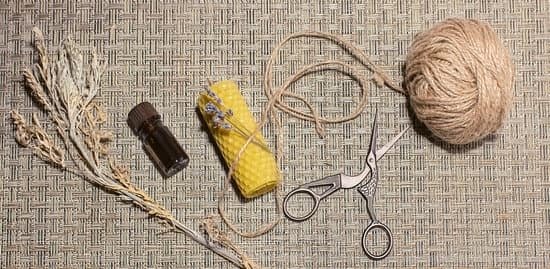
Aromatherapy Candle Oil

Aromatherapy Candle Oil

Aromatherapy candle oils go way back to the time of Ancient Dynastic China when distillation was yet unheard of but incense sticks were about as popular as they are today, perhaps even more. Aromatherapy candle oils are essential oils derived from plants through several methods of extraction. These aromatherapy candle oils may come from several different parts of plants, such as flowers, twigs, leaves, barks, roots, and rinds of fruit.

The aromatherapy candle oils are said to have various therapeutic benefits although there is no actual scientific proof of that. Many can attest though that the oils used in aromatherapy certainly can help in improving well-being and enhancing the effects of other healing methods.

How do Aromatherapy Candle Oils work?

Aromatherapy candle oils work through a process called diffusion. It is when the aromatherapy candle oils are dispersed into the air to fill the room with its fragrant aroma. Diffusing aromatherapy candle oils is fairly easy and very inexpensive. You only need a candle and a match and perhaps a pretty candle holder to go with your coffee table at home.

First, light up the candle and let it burn for at least five minutes. Next, blow it out and then add a few drops of aromatherapy candle oil into the melting wax. Make sure that you do not add the drops into the wick. Once the aromatherapy candle oils steep into the wax, light up the wick again and wait for the aroma to start filling your room.

Aromatherapy candle oils, like other essential oils, are highly volatile and concentrated, which also means that they are highly flammable. Exercise caution when you use them and make sure that you do not leave anything near your candle that might caught on fire. Only use a few drops of pure aromatherapy candle oil or dilute them by mixing them with carrier oil into a glass bottle.

How do you store Aromatherapy Candle Oils?

Although aromatherapy candle oils do not become rancid, they can deteriorate over time. When they do, they may lose some of their important therapeutic benefits. Not all aromatherapy candle oils deteriorate though, and some may even improve over time. One perfect example for this is patchouli and sandalwood which only improve after the passage of time.

To avoid deterioration in your aromatherapy candle oils, store them in amber or cobalt blue bottles. Dark glass such as amber and cobalt helps keep out sunlight which may damage your aromatherapy candle oils. Protect the aromatic and therapeutic benefits of your aromatherapy candle oils by purchasing small (about 5ml or 10ml) bottles or vials.

TOTAL WORD COUNT – 436
KEYWORDS “Aromatherapy Candle Oil” = 19 (density = 4.0%)

Candle Wedding Favors – The Romantic Favor

Candle Wedding Favors

Candle wedding favors are a wonderful gift to share with your guests in commemoration of your special. Evoking all that is romantic about marriage, candle wedding favors are the perfect way to rekindle in your guests all the feelings of joy and togetherness that was celebrated on your special day. Perhaps your candle wedding favors may even be responsible for creating a new romantic moment for your guests!

Candles have long been an important part of the wedding ceremony, and wedding favor candles are a special way to extend the togetherness they represent to your guests. Many ceremonies include the lighting of one candle from two, symbolizing the union between the newly wed couple. Candle wedding favors will remind your guests of this special moment long after the day itself has passed.

And as wedding favors, candles are the most romantic choice. Whether your guests are happily married or on the look out for love, what better way to invite the sense of romance that you and your spouse share into their lives than with candle wedding favors.

And these days, there is a huge variety of wedding favor candles available, from traditional votives to novelty candle wedding favors in almost as many shapes and sizes as you can imagine. Wedding favors candles are available in gorgeous red rose or heart shapes to accentuate the sense of romance, while the more traditional couple can choose classic pillar style candle wedding favors.

Whatever the theme or style of your wedding, there will certainly be a candle wedding favor to match. Capturing so much of the symbolism of the wedding ceremony, there is nothing that can compete with the special significance of candle wedding favors. Invite your guests to find for themselves the special romance that the newly weds enjoy by sharing with them beautiful candle wedding favors.

Candle wedding favors are a wonderful way to celebrate your wedding with your guests.

Crystal Candle Chandelier

Crystal Candle Chandelier

Do not ever consider that a crystal candle chandelier is just ideal for ancestral homes and landmark buildings such as the Louvre Museum in Paris or the White House in Washington. Entertaining such notion only suggests that you are somehow underestimating the intricacy of its design. Yes, it is unmistakably glamorous that as guests will behold its sight, it will be a redolent of intimidation. Actually, it all boils down to how the host will treat every visitor who steps into his or her abode because any ornamentation for that matter is only subject for enhancement.

At Arcadian Lighting, they distribute the finest crystal candle chandelier from respected manufacturers in the industry. Not only do they believe in the effectivity of the information superhighway marketing, they also grant about 50% discount off in the regular price, which is way better of a great deal as compared to other retail outlets. Visit them now at www.arcadianlighting.com so you can see the products for yourself.

Feuille is a crystal candle chandelier from Designers Fountain. It may be modest in size but it is very stately in appeal. Such collection features faceted droplets of gems as well as fragile ironwork and antique covers that gives that look which marries simplicity and grace. It is 20.5” in height and 19” in width. Finished with Mediterranean Patina, its lamping has nine candelabra base. It is available at $206. 12.

Orleans is a combination of puffy scrolls and crafted details. It has amber gems that drop elegantly in fringed hues which is reminiscent of a very luxurious European period. Manually pained with a Moroccan finish, it is enhanced with antique accessories that are silver in color. It is intended to further elevate its fundamental formality appearance. It is 31.5” in height and 30.5” in width. Made by Designers Fountain, its lamping has six candelabra base. It is available at $614. 40.

Renaissance is stirred up by the revival of the most famous era in the history of Europe. It has a frosted guise with silver gems hanging all around. It also features forged ironwork with an ornamentation of an acanthus leaf and finished with a golden moss. It is 33” in height and 26” in width. Made by Designers Fountain, its lamping has six candelabra base. It is available at $474. 99.

Mirage is a crystal candle chandelier from Designers Fountain. It has that harmonious combination of sophisticated vines and leaves. With lead prism of gems and blush tinted flowers, it has that dazzling enduring style. It also manually painted in Mediterranean Patina finish which is another factor to its opulence stating a timeless motif. It is 24” in height and 27” in width. Its lamping has six candelabra base. It is available at $524. 99.

History of Candle Making

History of Candle Making

Who invented the candle?

Candles were invented independently in many countries. The Egyptians and Cretans made candles from beeswax, about 3000 BC. In the fourth century BC there were clay candle holders in Egypt. Qui Shi Huang (259 – 210 BC) was the first Emperor of the Qin Dynasty (221 – 206 BC). His mausoleum was rediscovered in the 1990s 22 miles east of Xi’an in China and contained candles made from whale fat. In early China and Japan tapers were made with wax from insects and seeds, wrapped in paper. Wax from boiling cinnamon was used for temple candles in India. There is a fish called the “smelt” or candlefish, found from Oregon to Alaska. During the first century AD native Americans used oil from this fish. They put it on a forked stick then lit it. Excavations at Pompeii discovered several candelabra. The Latin word “candere” means to flicker. Yak butter was used for candles in Tibet. In Europe the earliest surviving candle was discovered near Avignon in France, from the first century AD. In 848 King Alfred used a candle-clock which burned for 4 hours. There were lines around the side to show the passing of each hour. Later, there were 24-hour candles. The Sung dynasty in China (960 – 1279) also used candle-clocks. By the 18th century, the Chinese put weights into the sides. As the candle melted, the weights fell off and made a noise as they fell into a bowl. A form of candle-clock was used in coal-mining until the twentieth century. The novel “Anthem” by Ayn Rand contains a scene in chapter VII, where there is a painting showing “the twenty men who invented the candle”. This can only be fanciful.

The Middle Ages

During the middle ages, the popularity of candles is shown by their use in Candlemas and on Saint Lucy festivities. Tallow, fat from cows or sheep, became the standard material used in candles in Europe. The Tallow Chandlers Company of London was formed in about 1300 in London, and in 1456 was granted a coat of arms. By 1415 tallow candles were used in street lighting. The trade of the chandler is also recorded by the more picturesque name of “smeremongere”, since they oversaw the manufacture of sauces, vinegar, soap and cheese. The unpleasant smell of tallow candles is due to the glycerine in it. For churches and royal events, candles from beeswax were used, as the smell was usually less unpleasant. Dating from about 1330, the Wax Chandlers Company acquired its charter in 1484. The first candle mould comes from 15th century Paris. The smell of the manufacturing process was so unpleasant that it was banned by ordnance in several cities. The first American colonists discovered that bayberries could be used to make candles, but the yield was very poor. 15 lbs of boiled bayberries would provide only 1 lb of wax.

new types of oil

Spermaceti is oil that comes from the sperm whale. From about 1750 it was used to provide very expensive candles. By 1800 a much cheaper alternative was discovered. Brassica campestris is derived from rape seed. It yields colza oil. This was the best candle yet, producing clear smokeless flames. The French chemists Michel-Eugene Chevreul (1786 – 1899) and Joseph-Louis Gay-Lussac (1788 – 1850) patented stearin, in 1811. Like tallow, this was derived from animals, but had no glycerine content. Joseph Sampson had the second patent ever granted in the United States. It was for a new method of candle-making in 1790. In 1806 William Colgate (1783 – 1857) (later famous for his “Soap and Perfumery Works”) established a tallow factory in New York. By 1847 he had switched to making soap. There seems to be an ethical component of many nineteenth-century soap and candle manufacturers, as Colgate became involved with Bible Societies. James Wilson of Price’s Candles were also concerned about promoting Christianity, and abolishing slavery. Following the defeat of Napoleon at Waterloo, there were celebration dances across Europe. It is sometimes said that more candles were burned in 1815 than in any year before or since. In 1834 Joseph Morgan began to industrialise the production of candles. He invented a machine to manufacture 1,500 per hour, from a mould.

Paraffin and palm oil

Paraffin is a waxy hydrocarbon, without any smell. A chemist called Laurent distilled it from schist in 1830, and another chemist Dumas, obtained it from coal-tar in 1835. Not until 1850 did it become commercially viable, when James Young filed a patent to produce it from coal. This was a major blow to the candle industry. From this point, candles became more of a decorative item. In 1829 William Wilson of Price’s Candles invested in 1,000 acres of coconut plantation in Sri Lanka. His aim was to make candles from coconut oil. Later he tried palm oil from palm trees, but an accidental discovery swept all this aside. His brother George Wilson distilled the first petroleum oil in Burma in 1854. By 1922 Lever Brothers had bought Prices Candles and in 1922 a joint-owned company called “Candles Ltd” was created. The three owners are today better known as Shell Oil Company, BP and Burmah Oil. By 1991, the last remaining owner of “Candles Ltd” was Shell, who sold off the candle-making part of business.

The oldest candle manufacturers still in existence are Rathbornes Candles, founded in Dublin in 1488.